Dollar, euro losing ground in global monetary system









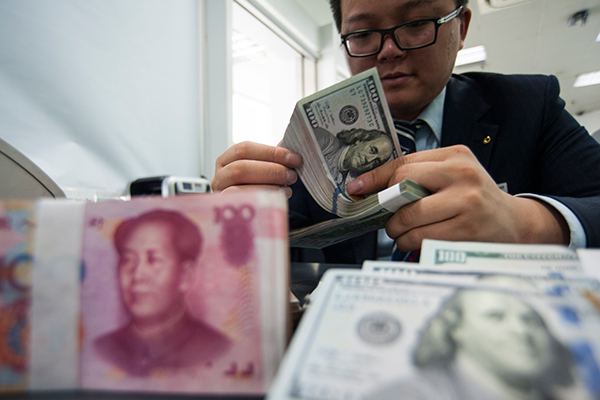
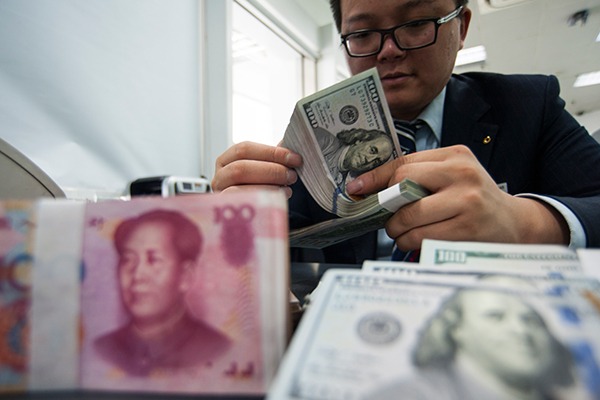
Even before the recent geopolitical tensions flared up, cracks had already started appearing in the global monetary system dominated by the US dollar. Much of that was due to the rise of China as an economic power, and consequently its currency, the renminbi, gradually making inroads into the global trading system, helped partly by Beijing's push for its internationalization.
Traditionally, a currency's global standing is measured by its role as a reserve, settlement and financing currency. On all three fronts, the RMB has steadily made impressive progress.
According to a 2025 report by the People's Bank of China, the RMB is now the world's third most-used currency for trade financing and settlement, the third-most used currency for cross-border payments and has the third-largest weight in the International Monetary Fund's special drawing rights (SDR) basket, trailing only the dollar and the euro.
Two factors have further accelerated this balkanization of the global monetary system. One is the emergence of digital currencies based on blockchain technologies. Bitcoin and hundreds of other non-sovereign digital currencies have been used in large volumes of transactions around the world, though no one seems able to quantify the exact scale.
Major central banks are not idly watching these seismic changes. They are racing to launch digital currency initiatives of their own to keep up with the digital revolution in the currency space.
For example, the People's Bank of China and the Hong Kong Monetary Authority have joined hands with several central banks in the Gulf region to roll out the ambitious mBridge project, which is essentially an inter-central-bank settlement system based on blockchain technologies to support transactions in various currencies.
The other factor is geopolitics. Amid escalating tensions in various regions, many countries want to use their own currencies for trade settlement. This is best demonstrated by the alternative currency initiative being explored by the BRICS grouping. Gold has once again emerged as a crucial asset for many countries seeking to mitigate risks amid geopolitical tensions.
Incidentally, the US and the EU have themselves aided the currency balkanization trend. The numerous sanctions they have imposed on several countries, especially major oil producing countries such as Russia and Iran, and the confiscation of Russian assets by the West after the outbreak of the Ukraine conflict, has eroded the global stature of the dollar and the euro.
Today, even assets of private citizens of sanctioned countries are at risk of being confiscated.
As former US secretary of the treasury Janet Yellen once pointed out, the US sanctions pushed more countries to seek alternative financial transaction methods that do not involve the dollar.
Understandably, US President Donald Trump doesn't like the idea of the US dollar losing ground. He had once threatened to impose 100 percent tariffs on countries involved in the new BRICS currency. But it is precisely this weaponization of the dollar that is turning off other countries' appetite for the greenback. When sanctions become a habit, alternatives begin to look like necessities.
By 2026, the shift away from a fully dollar-centric system is unlikely to be dramatic, but it will become more institutionalized. What changes is not dominance overnight, but the growing normalization of using alternatives alongside the dollar.
It takes decades to dethrone a dominant currency. The British pound, for example, is still widely popular even decades after the United Kingdom passed its prime. So, the dollar will remain by and large the world's most dominant currency for many years to come. My unlicensed crystal-ball prediction is that both the dollar and the euro will probably lose about 1 percent of their market share in the global monetary system in 2026. China's RMB will continue to make inroads, but at a gradual pace.
The author is a professor at the University of International Business and Economics in Beijing.
The views do not necessarily represent those of China Daily.
If you have a specific expertise, or would like to share your thought about our stories, then send us your writings at opinion@chinadaily.com.cn, and comment@chinadaily.com.cn.