Unease in Gulf as war clouds gather










Tehran does not look like a city on the brink of war.There are traffic snarls, some streets are bustling with people, and it's business as usual for shops. On the surface, there is no sign of an impending war.
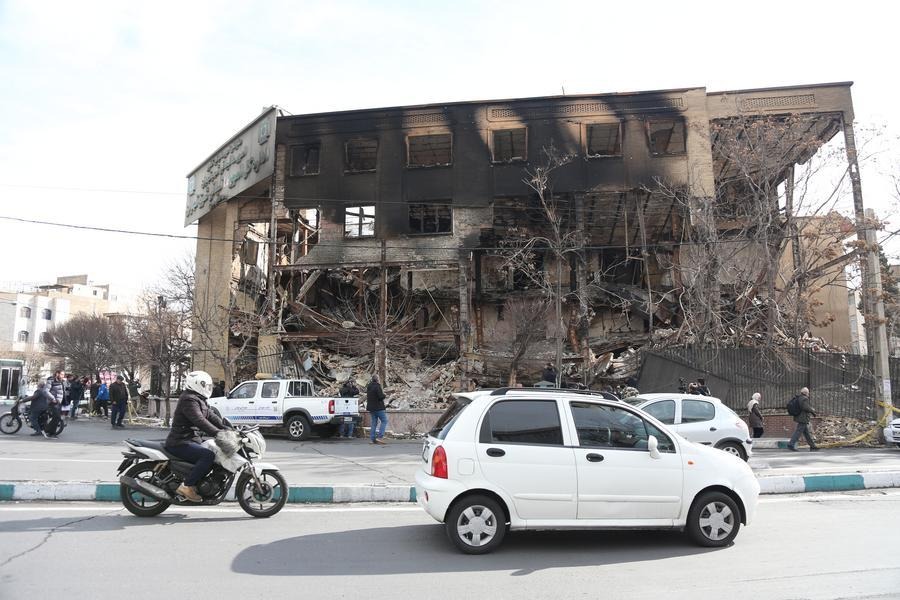
But once you speak to the locals, their anxiety over potential military strikes by the United States becomes palpable. The pain and resentment from the severe casualties during the recent social unrest are also not hard to detect. Damaged buildings and stores, as well as the ruins from bombings serve as reminders of the 12-day war with Israel last year.
Not just Tehran, but Iran as a whole currently face a dangerous crisis. Following the outbreak of public protests in Iran in late 2025, the US and Israel quickly expressed their verbal support for the protesters. Israel's Mossad even declared that its operatives were marching alongside the protesters in the streets of Iran. US President Donald Trump has repeatedly threatened Tehran with military action if protesters were killed.
Since the 12-day war, Washington's most fundamental and urgent goal has been to force Tehran to surrender. The US wants an Iran that poses no threat to Israel. Trump's support for protests in Iran and his military threats serve this goal. Protecting the freedoms of Iranian citizens was not a major consideration for the US.
This is evident in the large-scale deployment of military forces to Iran's periphery, coupled with the already strong US military presence in the Middle East, clearly demonstrating Trump's determination. Judging from its recent hardline stance toward Venezuela, Iran, Cuba, Denmark and Canada, the US is becoming the world's leading destabilizing factor.
As for Iran, domestic discontent has intensified in recent years. The US actions and rhetoric will exacerbate Iran's internal conflict. Compared with the US, Israel has taken a much tougher stance toward Iran, hoping to weaken or even overthrow the regime in Tehran. Every instance of internal unrest in Iran provides an opportunity for the US and Israel to move closer to their goal.
With the US military buildup and a US-Iran military conflict looming, countries such as Turkiye, Saudi Arabia and Qatar are actively working to avoid a regional conflict. These countries understand that if the US launches a military strike, Iran is bound to retaliate. Small-scale attacks on Iran will be ineffective, while a large-scale attack would escalate into a regional war. Given the ongoing reshaping of the Middle East's geopolitical landscape, these countries do not want the situation in Iran to escalate and are therefore actively mediating between the US and Iran.
The Turkish newspaper Hurriyet reported on Jan 29 that during a phone conversation, Turkish President Recep Tayyip Erdogan suggested to Trump that a trilateral summit between the US, Turkiye and Iran be held in Ankara, to which Trump responded positively. Turkiye's proposal has stirred considerable interest within Iran, with one Iranian political analyst publicly urging Iranian President Masoud Pezeshkian to take the Ankara trilateral summit seriously. The same day, the Saudi Arabian defense minister traveled to Washington to discuss the situation in Iran with US officials.
While Turkiye and Saudi Arabia's last-minute mediation efforts should not be taken too seriously, completely ignoring them is also inappropriate. Mutual compromise is an inherent requirement of negotiation. If the conflicting parties agree to sit down at the negotiating table, it means they have room for compromise. Trump, with his penchant for "deals", is unlikely to misjudge costs and benefits. However, for Tehran's policymakers, their disadvantages in the current crisis are very clear. If they merely use negotiation as a delaying tactic, they may not succeed this time.
For Iran, countering the military threat posed by the US is a priority. Faced with a much stronger adversary, it would suffer far greater losses than in the 12-day war. However, objectively speaking, the negotiation conditions proposed by the US are too harsh, even seriously jeopardizing Iran's national sovereignty.
Will the US and Iran go to war or make peace? For me, currently in Tehran, neither reports of a US military strike on Iran nor the news of an agreement between the two countries would come as a surprise. After more than 40 years of confrontation, US-Iran relations appear to have reached a tipping point.
The author is the director of the China-Middle East Center at Shaoxing University.
The views don't necessarily represent those of China Daily.
If you have a specific expertise, or would like to share your thought about our stories, then send us your writings at opinion@chinadaily.com.cn, and comment@chinadaily.com.cn.