Economic transformation bears fruit in Guizhou


Transformation
Almost all of the 400 families in Pingtan village are growing kiwi fruit nowadays. A family can earn $8,000 to $9,000 a year, compared with the per capita average annual income of 4,800 yuan in Guizhou's rural areas, according to statistics compiled by the local government in 2012. Growing kiwis is a great business, not only for Shi, but also for the other 250,000 farmers in Xiuwen county.
|
 |
"Choosing the right business is really important, especially for farmers in Guizhou," said Shi. A lack of farming knowledge and experience meant that most villagers, who have little formal education, could only cultivate the most basic crops in the past. "Many families couldn't even feed themselves," she said.
The region's geography, weather and the local ecosystem have combined to create a garden-like environment in Guizhou. Thanks to the 40 percent forest coverage in the province, the capital city, Guiyang has an average temperature of 17 C all year round and the level of airborne PM 2.5, or fine particulate matter, is usually between 40 to 60 micrograms per cubic meter, a range that indicates some of the cleanest air in China.
However, the downside is that the mountainous nature of the area makes transport difficult and that has resulted in related problems, such as a poor general level of education, lower average incomes and slow economic growth.
However, Guizhou is fighting back to make full use of its rich natural resources and to maintain the ecosystem. The results of this policy are becoming evident in Guiyang, which has been working toward industrial transformation and environmental protection for several years.
Xiuwen county is a reflection of the changes in Guiyang. Apart from helping local farmers to better utilize the area's natural resources, the county government has also given support to exploration of the market for herbs and the traditional medicines produced by the Miao ethnic group.
The perfect environment
As home to around 4.3 million Miao people - around half the total population - Guizhou has the advantage of using the Miao's unique formulas. De Chang Xiang Co, established in 1900, is one of the leading producers of traditional Chinese medicines in the province.
 |
|
Farmers in Xiuwen county are improving their standard of living by growing konjak, a plant that is considered a health food by many people in Asia. Qiao Qiming / for China Daily |
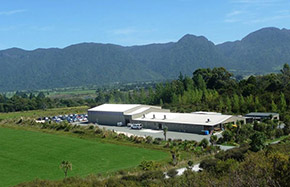
Driving from Guiyang's downtown area to the De Chang Xiang factory, the thick jungle and quiet forests make it hard to pinpoint the company's location until a strong fragrance of herbs fills the nostrils. A road sign alerts travelers to the fact that they have just arrived in Xiuwen county in the northern part of Guiyang.
"Humidity here is about 70 percent all year round and the temperature is moderate. These two factors have produced the perfect environment for growing herbs," said Wang Xun, a pharmaceutical engineer at the company who has been researching traditional Chinese medicine for 15 years.
De Chang Xiang produces 127 types of traditional Chinese medicine, 15 of which employ unique formulas. In addition to treatment for common ailments, such as colds, the company also produces herbs that complement chemotherapy. One of the special Miao formula drugs for the condition is among China's top 10 of its type in terms of sales.
"Chemotherapy drugs are used to improve the patient's immunity levels and increase the number of white blood cells. Most of these drugs are Western, but Chinese patients prefer herbal medicines because they have fewer side-effects," said Wang.
The company's best-selling drug is used in the treatment of gynecological ailments such as extreme period pain. Wang displayed a red and yellow paper box containing 160 pea-sized traditional Chinese medicine pills made from about 40 different herbs. The treatment earns the company around $49 million a year.
"Other Miao formulas also enjoy a good reputation in the markets of China and Southeast Asia, especially drugs that improve kidney function and strengthen the bones," said Wang.
Related reading:
Investment, not austerity
The philosopher's park