|
|
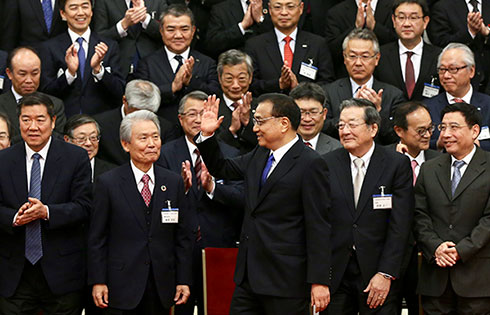
Finance and labour ministers gather for a group photo of the G20 Joint Meeting of Finance and Labour Ministers in Ankara, Turkey, September 4, 2015.[Photo/IC] |
Unprecedented economic growth over the last three decades turned East Asia into an economic powerhouse responsible for a quarter of the world's economy. Hundreds of millions of people across the region, including in China, Indonesia, Malaysia, Thailand and Vietnam, lifted themselves out of extreme poverty and enjoyed greater prosperity, largely because of more labor-intensive and inclusive growth.
But the success didn't come without challenges. As of last year, 100 million people in East Asia were still living on $1.25 a day and about 260 million on $2 a day or less. They could fall back into poverty if the global economy takes a turn for the worse or if they face health, food and other shocks at home. Their uncertain future shows the increasing inequality of East Asia's galloping growth.
The income divide was exacerbated by the 2008 global financial crisis. Income inequality has worsened in China and Indonesia, and stagnated at high levels in countries such as Singapore, Malaysia and the Philippines.
The broadening income gap reflects challenges for economic policymaking, including adopting a more inclusive approach that promotes job creation, improves education and skills training, and builds environmentally sustainable infrastructure. The lack of adequate social protection programs also plays a role.
Amid the current climate of slowing global growth and market instability, it has become increasingly clear that inequality presents a long-term challenge, and failure to address it means more people are at risk of being left behind, weakening economic prospects for the region.
How can East Asia sustain strong growth and create better opportunities and more prosperity for everyone?
The topic will be a central theme at the Asia-Pacific Economic Cooperation finance ministers' meeting to be held in the Philippines on Sept 10-11. We believe the way forward is to take steps to ensure that the poor-and those on the margins of impoverishment-share the benefits that come with economic prosperity. We can do this by creating more income and prosperity for the bottom 40 percent of the population, or this group runs the risk of falling behind again.
That means focusing on bolstering economic growth while helping people get the education and skills they need-beginning in early childhood-so they can compete globally. That, in turn, means countries should provide equal economic and social opportunities to everyone, not just the elite. It also means better governance and fiscal policies, more infrastructure development and building stronger resilience to the financial risks of increasing climate change. After all, dealing with inequality needs long-term solutions and always centers on human development.
To address inequalities we need comprehensive and sustainable solutions to address income inequality. We can learn from the experience of other countries and also seek better cooperation through multilateral platforms such as APEC, Association of Southeast Asian Nations and various Latin American organizations. This cooperation should include knowledge sharing and policy action that supports economic growth, trade, direct investment and other financial cooperation. It can also create a level playing field to support competition, markets and trade across the Pacific region.
In addition to an overall supportive macro-economic environment, direct support may be needed to provide immediate stimulus to those left behind. APEC's Latin American members like Mexico (Oportunidades and Prospera), Peru (Juntos) and Chile (Chile Solidario) have used conditional cash transfers to increase school attendance, and expand preventative healthcare and nutrition programs for the poor and vulnerable. We also have seen how successful conditional transfers have improved lives for the better in countries like the Philippines.
In a period of volatility in economies around the world, the plan sets the APEC region in the right direction-helping people rise out of poverty and share in the benefits of growth.
The author is World Bank regional vice-president for East Asia and the Pacific.

Copyright 1995 - . All rights reserved. The content (including but not limited to text, photo, multimedia information, etc) published in this site belongs to China Daily Information Co (CDIC). Without written authorization from CDIC, such content shall not be republished or used in any form. Note: Browsers with 1024*768 or higher resolution are suggested for this site.
License for publishing multimedia online 0108263 Registration Number: 130349