Call for democratizing global climate governance










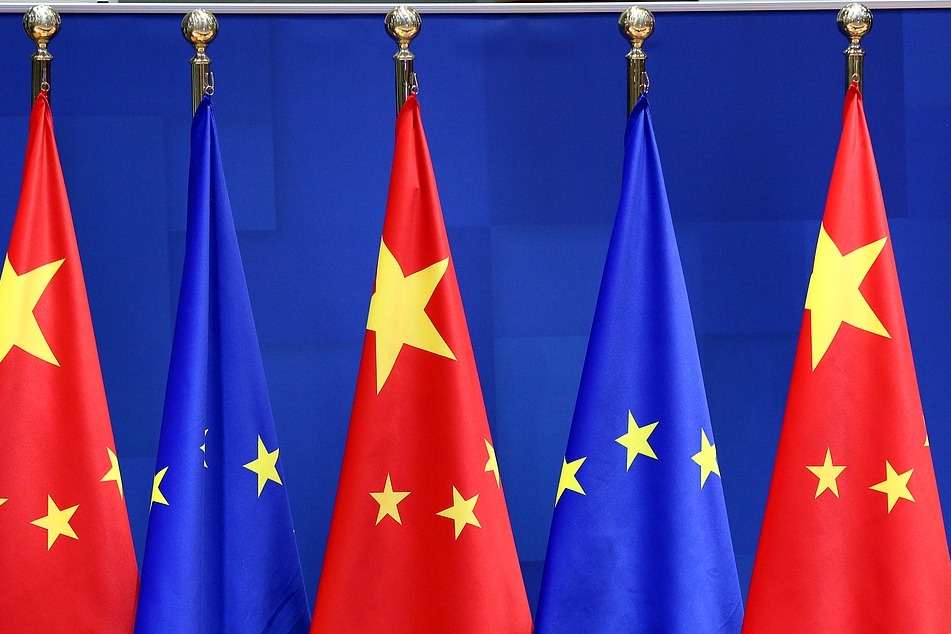
The just-concluded 25th China-EU Summit, which coincided with the 50th anniversary of the establishment of diplomatic relations between the two sides, issued a joint statement on climate change, detailing the way forward as the world approaches the 10th anniversary of the Paris Agreement.
Climate change poses an unprecedented threat to all countries. As two major forces committed to building a multipolar world, China and the European Union have always called for global climate governance based on the UN Framework Convention on Climate Change, the Kyoto Protocol and the Paris Agreement. Since "green" is the hallmark of China-EU cooperation, the two sides agree on climate action, ecological preservation and environmental protection.
In stark contrast to China and the EU, the United States has been taking unilateral actions detrimental to not only global climate governance but also the natural environment. For example, on July 4, the US passed the "One Big Beautiful Bill Act", which will undermine the country's energy transition as well as global climate cooperation. The bill deals another blow to the global fight against climate change, especially as the US has once again begun the process of withdrawing from the Paris Agreement — a reversal of the previous administration's decision to rejoin it.
Against such a background, strengthening China-EU climate cooperation has become even more important.
For a long time, both China and the EU have attached great importance to fighting climate change, launching a series of productive policy dialogues and engaging in practical cooperation. From hosting the Global Sustainable Transport Forum to establishing the China-Europe carbon neutrality research center, from the zero-emissions vessels in Northern European ports to the industrial parks producing solar panels in the Iberian Peninsula, China-EU cooperation on green development has been advancing in both depth and latitude.
The latest China-EU joint statement on climate change further stresses the need for the two sides to deepen cooperation in areas such as energy transition, climate adaptation, carbon market, and green and low-carbon technology.
But such cooperation comes with challenges due to the EU's lack of real concern for the Global South as a major development force. On July 23, just a day before the China-EU Summit, the International Court of Justice delivered its first advisory opinion on climate change, asserting that countries have a legal obligation to protect the climate system from anthropogenic greenhouse gas emissions and mend the resulting damage. The case saw the highest level of participation from the international community in the ICJ's history, with 91 written statements and 62 written comments filed in the Registry by States and international organizations, including China and the EU.
Despite claiming to be a "green flagbearer", the EU targeted developing countries including China in the written statement it submitted to the court. It claimed that climate mitigation obligations of all the state parties to the Paris Agreement have changed the basis of the principle of common but differentiated responsibilities and respective capabilities. It also said the principle is based on the different national circumstances of the states, but not on developed countries' responsibility for historical emissions, so the countries with enhanced capacity should shoulder more responsibility for reducing emissions, and provide financial assistance for less-developed economies.
Blurring the line between developed and developing countries, the EU intends to transfer the responsibility of reducing emissions and providing financial assistance from the Global North to the emerging market economies such as China. Unfortunately, the EU's contention influenced the ICJ's final opinion. Although the court recognized common but differentiated responsibilities as the guiding principle directly applicable to climate change, it held that the principle does not call for assigning new responsibilities to countries.
This is to say, the ICJ fell short of analyzing how the principle provides meaningful guidance for the interpretation of treaties, limiting the effectiveness of the principle merely to the nominal level.
The ICJ's advisory opinion is a mirror that reflects the power imbalance between the Global North and the Global South in making global climate governance rules, which is unfair to the Global South.
Studies show that about 90 percent of the excessive carbon emissions come from developed countries, with developing countries, especially least-developed and small island developing countries, being disproportionally affected by climate change. Worse, they lack the needed technology and financial support to cope with the challenge. These countries need global cooperation, including technology transfer and financial assistance from the developed economies, to combat climate change. And it is the common but differentiated responsibilities principle that lays the foundation of global cooperation.
As part of the Global South, China has been emphasizing the key role of the common but differentiated responsibilities principle in global climate governance. In its written statement, China said the essence of global climate governance based on the UNFCCC is to stress the legal obligation of "differentiation": Article 3 of the convention refers to "common but differentiated responsibilities and respective capabilities", thus establishing the primacy of the principle, with the Nationally Determined Contributions clause of the Paris Agreement further developing it.
It's time the Global South amplified its collective voice in global climate governance to counter West-centrism. This is necessary for democratizing the global climate governance system, and prompting the international community to make global climate governance more effective by adhering to the China-proposed principles: extensive consultation, joint construction and shared benefit. Only if we combat climate change through multilateral cooperation can all countries reduce the cost of their climate actions and cope with climate challenge.
The author is an assistant research fellow at the China Institute of International Studies.
The views don't necessarily reflect those of China Daily.
If you have a specific expertise, or would like to share your thought about our stories, then send us your writings at opinion@chinadaily.com.cn, and comment@chinadaily.com.cn.