Initiative a blueprint for a fairer and equitable world order










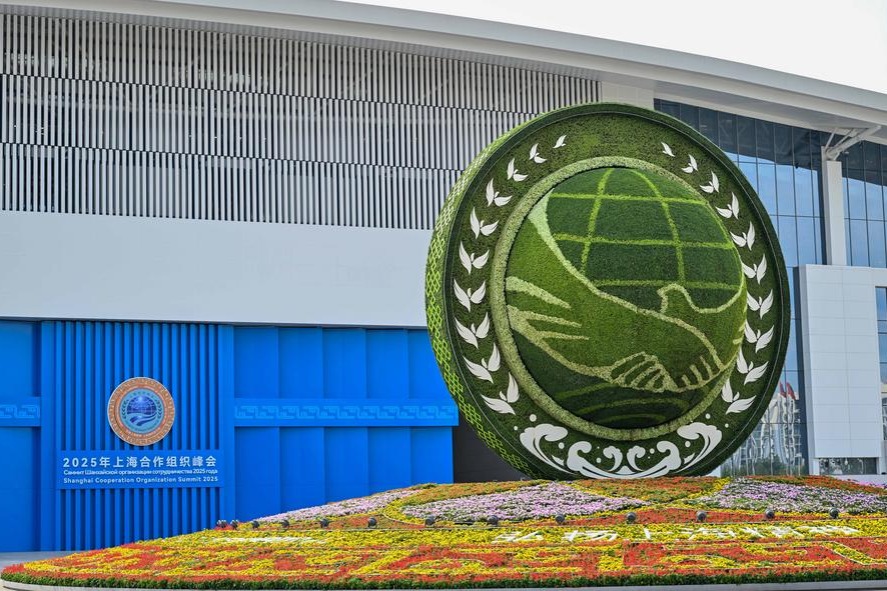
At the recently concluded Shanghai Cooperation Organization Summit in Tianjin, President Xi Jinping proposed the Global Governance Initiative, a visionary framework designed to transform the way countries collaborate on issues. The GGI is another major initiative proposed by President Xi, following the Global Development Initiative, the Global Security Initiative and the Global Civilization Initiative, with the aim of shaping a more inclusive future for humankind.
Far from being just another diplomatic gesture, the GGI embodies China's aspiration to foster equality and mutual respect in a world often fractured by competing powers. The initiative is based on five core principles: sovereign equality, adherence to international law, multilateral cooperation, a focus on people's needs, and a commitment to tangible outcomes that benefit all countries.
The Tianjin event was a landmark as it was the largest ever summit in the SCO's history, with heads of state and government of member states, observers and dialogue partners attending it. Amid discussions on regional and global challenges, President Xi's proposal of the GGI underscored China's growing influence in promoting cooperative solutions that can have a global impact.
Rooted in the SCO's "Shanghai Spirit", which underpins the philosophy of mutual trust, respect and shared prosperity, the GGI envisions a world where every country, regardless of its size, wealth and strategic power, has a role to play in shaping global affairs. The GGI makes China's message clear: no country is superior to others; all deserve a seat at the table.
The GGI's first principle, sovereign equality, lies at the heart of the initiative's vision. For too long, the countries of the Global South — across Asia, Africa and Latin America — have been sidelined in global decision-making. The GGI seeks to change this by ensuring that countries such as Pakistan, Ethiopia and Iran can engage as equals with bigger powers. Through platforms like the SCO, China is amplifying these voices, offering a pathway for smaller countries to shape their own destinies.
Equally important is the GGI's commitment to uphold international law with fairness and transparency. In a world where some powerful countries manipulate international rules to serve their own interests, China is advocating for the consistent application of the United Nations Charter. This approach is aimed at maintaining stability, encouraging dialogue over confrontation and ensuring decisions reflect shared values rather than the whims of a few nation states.
Multilateralism, another cornerstone of the GGI, underscores the need for collective action through organizations such as the SCO, BRICS and the United Nations.
As President Xi said at the summit, no single country should dictate the global agenda. He also emphasized the need for countries to abandon the Cold War mentality and refrain from forcing smaller nations to choose sides between two countries or blocs.
This essentially means that by sharing ideas and resources, countries can address pressing challenges like climate change, poverty, and technological disparities. For instance, the SCO's discussions on artificial intelligence cooperation highlighted how shared innovation can drive progress across borders.
The GGI also places people at the center of global governance, a principle that sets it apart from other international initiatives. Too often have Western global projects tended to favor corporate interests or foment geopolitical rivalries instead of being aimed at meeting the needs of ordinary people. But the GGI calls for policies that improve access to education, healthcare and employment.
At the Tianjin summit, China also proposed new SCO programs, including building digital economy infrastructure, and training centers for young leaders, and generating clean and green energy, demonstrating that it is committed to uplifting communities worldwide.
Besides, the GGI emphasizes action over rhetoric, ensuring that its ideas translate into real-world impact. China's track record with the Belt and Road Initiative has been excellent. The BRI has helped build roads, bridges, ports and railways in dozens of countries, apart from improving connectivity between economies and creating opportunities for millions of people.
For the Global South, the initiative offers an opportunity to engage as equals. It also stands as a counterpoint to some big powers' strategy of imposing sanctions, launching trade wars and/or putting military pressure on countries to punish them for not aligning with their policies.
The summit's unprecedented success and the new agreements signed in Tianjin underscore global support for China's vision. As a matter of fact, China's success in lifting about 800 million people out of poverty and becoming a leader in infrastructure and technology informs the GGI's goals. Through development programs like the Belt and Road Initiative, China has already helped countries such as Kazakhstan and Pakistan strengthen their economies. The GGI will build on this foundation, and offer a global framework in which every country gets the opportunity to prosper.
As the Global South grapples with challenges like inequality, climate change and regional conflicts, the GGI provides a hopeful path forward, while reminding the world that solutions emerge from countries working together in harmony.
More than a policy, the GGI is a bold vision for building a just and inclusive world order. By proposing the initiative at the SCO Summit, China has demonstrated its resolve to lead by example, and foster cooperation at a time when the world needs it most. For the Global South and beyond, the GGI offers a beacon of hope, showing that a better, fairer and equitable world order is not just a dream but an achievable reality.
The author is a Pakistani research analyst at the US-based Diplomat Risk Intelligence. The views don't necessarily represent those of China Daily.
If you have a specific expertise, or would like to share your thought about our stories, then send us your writings at opinion@chinadaily.com.cn, and comment@chinadaily.com.cn.