What the new proposal means for Cambodia









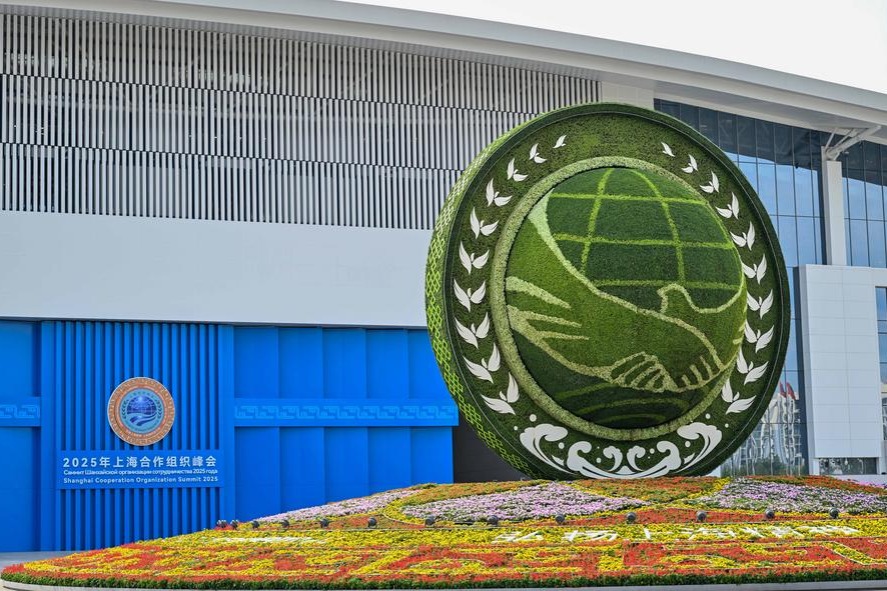
Amid a divided and uncertain world, President Xi Jinping proposed the Global Governance Initiative at the recent Shanghai Cooperation Organization Summit in Tianjin in order to build a more just and equitable global governance system.
The GGI is the fourth landmark initiative proposed by President Xi since 2021, following the Global Development Initiative, the Global Security Initiative and the Global Civilization Initiative. Over the past few years, President Xi has been proposing global initiatives, so as to promote shared development, strengthen security, advance social progress, and improve governance.
The timing of the latest proposal is important. This year marks the 80th anniversary of the establishment of the United Nations. An institution born after the war and established global rules and norms and facilitated good governance for decades, the UN today is struggling to deal with burning global issues.
China's message is simple: if the existing global governance system has reached a crossroads, it is time for new ideas — one that focuses on multilateralism and South-South solidarity. China wants to make the GGI a channel for promoting fairer, more equitable governance.
The five principles of the Global Governance Initiative, according to President Xi, are adhering to sovereign equality, abiding by international rule of law, practicing multilateralism, adopting a people-centric approach, and focusing on achieving real outcomes.
The GGI could be later expanded to include digital, cyber and financial sovereignty, which would enable countries to prevent any foreign interference in their domestic matters.
Also, with President Xi announcing at the Tianjin summit that China would accelerate the creation of an "SCO development bank", Beijing has shown non-Western development and governance models can be effective and result-oriented, too.
The GGI is complementary in nature, as it is not aimed at imposing new rules but at ensuring that all countries, especially those from the Global South, are involved in global decision-making. In that sense, the GGI is an open and adaptive governance process that will evolve over time, shaped by regional dialogue and pragmatic needs.
President Xi reiterated at the summit that "all countries, regardless of size, strength and wealth, are equal participants, decision-makers and beneficiaries in global governance". As such, small states can deepen their mutually beneficial relations with China.
By framing development and governance as non-zero-sum activities, the GGI reinforces an inclusive logic: a country does not need to suppress another country (or other countries) to continue its peaceful rise.
Cambodia can adopt the same approach to accelerate development and improve governance at home. Some initiatives were previously implemented in Cambodia through South-South platforms and extensive bilateral arrangements, such as the "ironclad friendship" between Cambodia and China.
Sino-Cambodian relations have always been rooted in mutual respect for sovereignty. Hence, Cambodian Prime Minister Hun Manet has wholeheartedly welcomed the GGI.
As a matter of fact, the GGI aligns with Phnom Penh's strategic preference for "win-win cooperation", where sovereign equality is maintained and development partnerships remain non-coercive.
More importantly, the GGI would further consolidate Cambodia's long-standing relationship with China. During President Xi's state visit to Cambodia in April this year, the two sides reviewed the plan of action for building a community with a shared future in the new era.
Despite the GGI being a global public good, China might need to address the negative narratives, strengthen finance and digitalization, promote people-centric development and emphasize that the initiative will pave the way for broader and forward-looking global cooperation and improve global governance, so as to convince the international community of its positive impact on the world. In fact, by being inclusive in nature, the GGI may appeal to countries seeking balance, respect, and autonomy.
The GGI's future depends on how it is interpreted, received and implemented. But what is clear is that China is seeking, with the help of the rest of the Global South, to improve global governance.
Moreover, the GGI signals that China wants all countries to play their due roles in setting the global agenda and making international rules.
The author is a research associate at Asian Vision Institute, a think tank based in Phnom Penh. The views don't necessarily represent those of his institution and China Daily.
If you have a specific expertise, or would like to share your thought about our stories, then send us your writings at opinion@chinadaily.com.cn, and comment@chinadaily.com.cn.